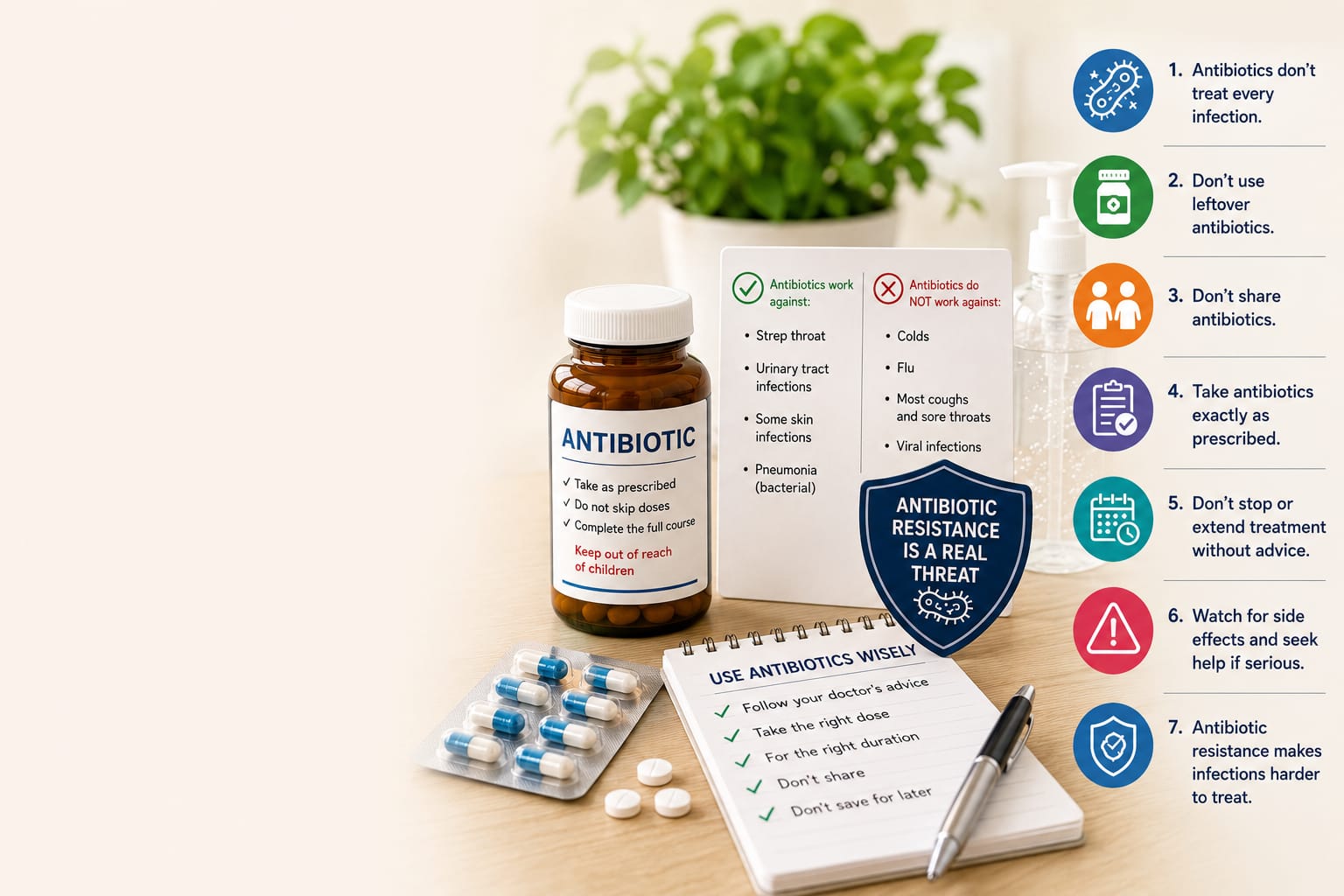
Antibiotics are important medicines used to treat bacterial infections. However, they do not treat viral infections such as most colds, flu and some sore throats.
7 Things You Should Know
1. Antibiotics don't treat every infection
Taking an antibiotic for a viral illness will not make the infection go away faster.
2. Don't use leftover antibiotics
The medicine may not be appropriate for your current illness and could delay the right treatment.
3. Don't share antibiotics
An antibiotic prescribed for one person may not be suitable for another person.
4. Take antibiotics exactly as prescribed
Follow the prescribed dose, timing and duration. Don't change the treatment on your own.
5. Don't stop or extend treatment without advice
If you are having problems with an antibiotic or are unsure about continuing it, speak to a healthcare professional.
6. Watch for side effects
Nausea, diarrhoea and stomach discomfort can occur. Seek urgent help for serious allergic reactions such as difficulty breathing or swelling of the face or throat.
7. Antibiotic resistance is a real problem
Misuse and unnecessary use of antibiotics can contribute to bacteria becoming resistant, making some infections harder to treat.
When Should You Seek Medical Advice?
Speak to a healthcare professional if your symptoms are severe, getting worse, or not improving as expected. Seek urgent care if you develop difficulty breathing, severe weakness, confusion or other serious symptoms.
Bottom Line
Antibiotics can save lives when used correctly—but they are not suitable for every infection. Use them only when appropriately prescribed or recommended by a qualified healthcare professional.