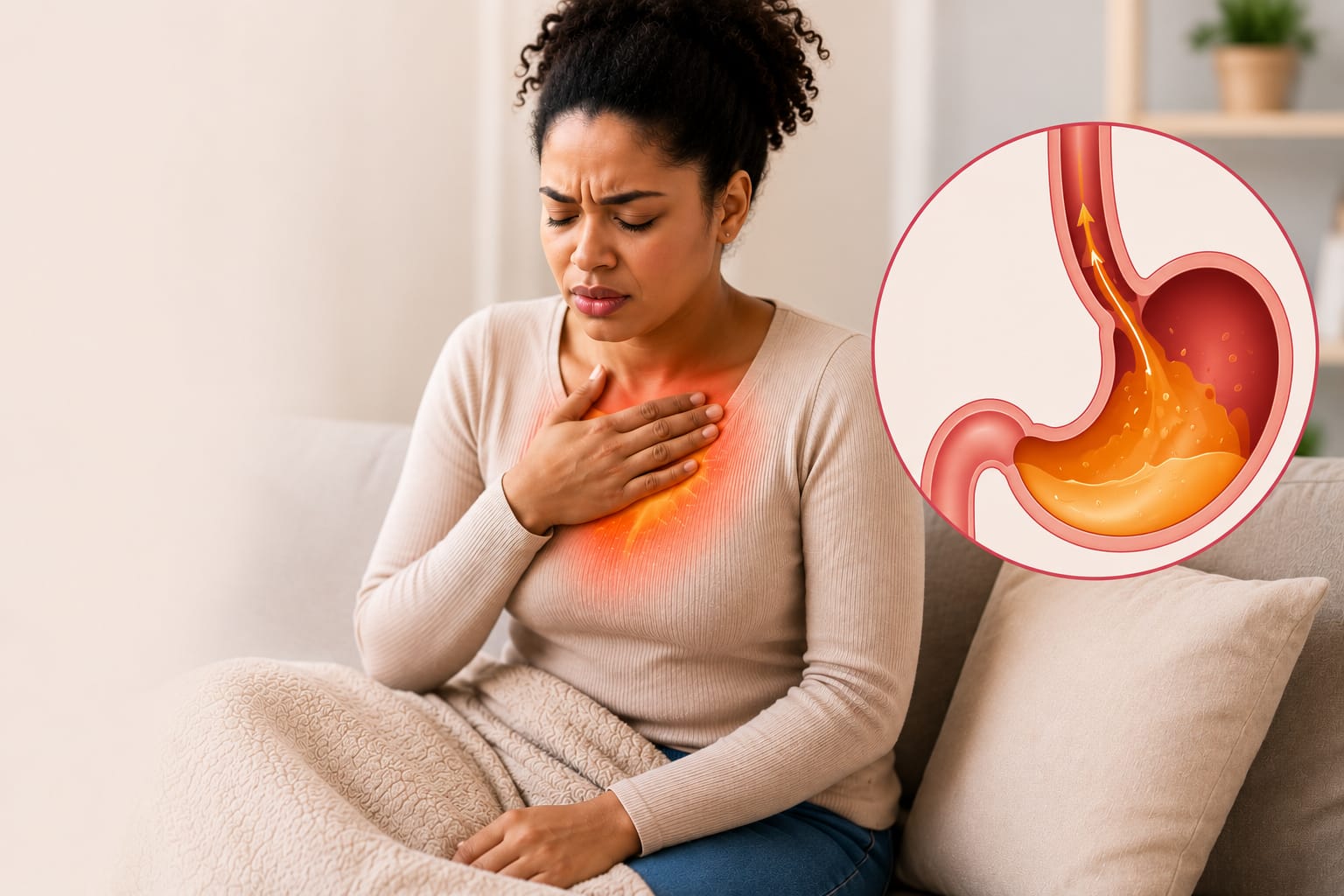
Heartburn is a burning sensation that occurs when stomach acid flows back into the oesophagus. It may cause a burning feeling in the chest, sour taste in the mouth or discomfort after eating.
Common Causes
Heartburn may be triggered by:
Large or heavy meals
Spicy or fatty foods
Eating shortly before bedtime
Excessive alcohol or caffeine
Being overweight
Pregnancy
Smoking
Certain medicines
Common Symptoms
You may experience:
Burning in the chest or upper abdomen
Sour or bitter taste in the mouth
Acid coming back into the throat
Bloating or belching
Symptoms that worsen when lying down
How Can You Reduce Heartburn?
Try to:
Eat smaller meals.
Avoid foods that trigger your symptoms.
Avoid lying down soon after eating.
Reduce alcohol and caffeine if they worsen symptoms.
Maintain a healthy weight.
Avoid smoking.
Raise the head of your bed if symptoms occur at night.
Pharmacists can also advise on suitable medicines for occasional heartburn.
When Should You Seek Medical Help?
Seek medical attention if heartburn is frequent, persistent or getting worse, or if you have difficulty swallowing, unexplained weight loss, persistent vomiting or vomiting blood.
Chest pain with shortness of breath, sweating, dizziness or pain spreading to the arm or jaw should be treated as an emergency, as it may not be heartburn.
Bottom Line
Occasional heartburn is common and can often be managed with lifestyle changes and appropriate treatment. However, frequent or severe symptoms should not simply be treated repeatedly without finding the underlying cause.