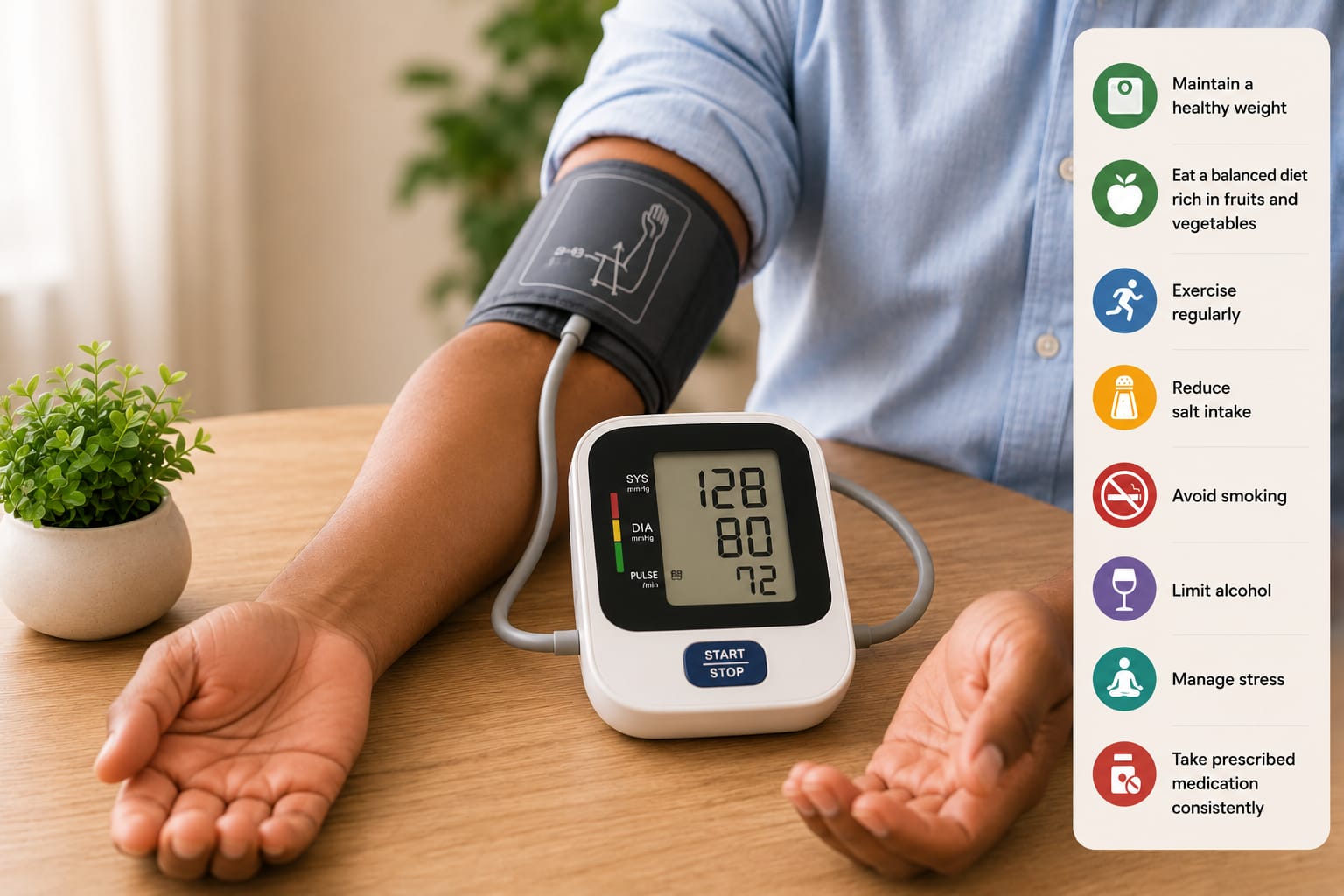
High blood pressure, also known as hypertension, occurs when the force of blood against the walls of the arteries remains consistently too high.
One of the biggest challenges with hypertension is that you may feel completely well even when your blood pressure is high. The only reliable way to know your blood pressure is to have it measured.
What Can Increase Your Risk?
Risk can increase with:
Being overweight
High salt intake
Physical inactivity
Smoking
Excessive alcohol consumption
Family history of hypertension
Increasing age
Some medical conditions
What Can You Do to Protect Yourself?
Check your blood pressure regularly.
Reduce excessive salt intake.
Eat a balanced diet rich in fruits and vegetables.
Exercise regularly.
Maintain a healthy weight.
Avoid smoking.
Limit alcohol.
Take prescribed blood-pressure medicines consistently.
When Should You Seek Medical Help?
Very high blood pressure can sometimes cause severe headache, chest pain, shortness of breath, confusion or vision problems. These symptoms require urgent medical assessment.
If you have already been diagnosed with hypertension, regular monitoring and adherence to treatment are important even when you feel well.
Bottom Line
Feeling fine does not necessarily mean your blood pressure is normal. Regular blood pressure checks can help detect hypertension early and reduce the risk of serious complications.