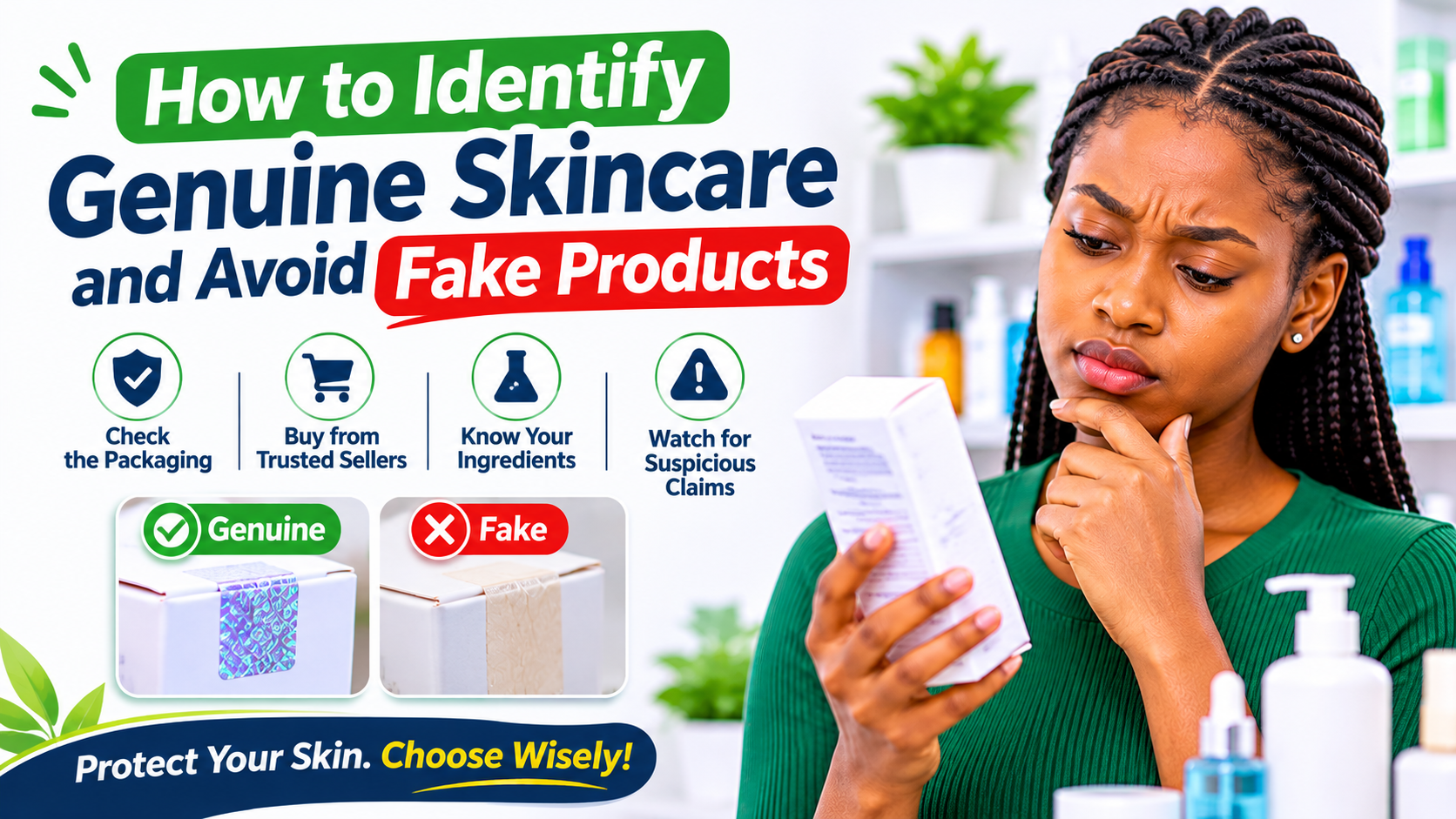
How to Identify Genuine Skincare and Avoid Fake Products
Skincare products are widely used to manage acne, dark spots, dryness, and uneven skin tone. However, not every product sold online or in shops is genuine.
Counterfeit cosmetics may contain unknown, unverified, or unsuitable ingredients that can irritate the skin, cause allergic reactions or lead to other skin problems. Some fake products are packaged so closely to genuine brands that they can be difficult to distinguish.
Knowing what to check before buying skincare can help protect your skin and your money.
1. Check the Packaging Carefully
Before buying a skincare product, examine its packaging.
Look for:
Spelling mistakes or unusual wording.
Poor-quality printing or faded labels.
Damaged seals or packaging that appears tampered with.
Missing batch numbers or expiry dates, where applicable.
Differences between the packaging and the manufacturer's official product images.
Counterfeit products may imitate the appearance of genuine products, so packaging alone cannot confirm authenticity.
2. Be Careful With Prices That Seem Too Good to Be True
An unusually cheap skincare product may be tempting, especially when popular brands are expensive.
However, significant price differences from reputable sellers should make you cautious. Counterfeit sellers may use unrealistic discounts to attract customers.
Before purchasing, compare prices from reputable pharmacies, authorised retailers or the brand's official channels.
3. Buy From Trusted Sellers
Where you buy skincare matters.
Choose reputable pharmacies, established retailers or sellers who can provide clear information about where their products come from.
Be cautious when purchasing skincare from unknown social media accounts, informal sellers or online stores with no verifiable contact details.
If you are unsure whether a product is genuine, contact the brand or its authorised distributor for verification.
4. Understand the Ingredients in Your Skincare
Knowing what common skincare ingredients do can help you choose products more confidently.
Niacinamide: A form of vitamin B3 commonly used in skincare to support the skin barrier, improve the appearance of uneven skin tone and help manage excess oil.
Retinoids: Ingredients related to vitamin A that are used in skincare to support acne management and improve the appearance of certain signs of ageing. They may cause irritation, especially when introduced too quickly.
Sunscreen: Helps protect the skin from ultraviolet radiation. Regular use of broad-spectrum sunscreen can help reduce sun damage and prevent existing dark spots from becoming more noticeable.
Always choose products appropriate for your skin and follow their instructions.
5. Avoid Products With Unclear Ingredients or Extreme Claims
Be cautious of products promising dramatic results within a few days, such as completely removing dark spots overnight or permanently changing your natural skin colour.
Check the ingredient list and product instructions before use.
Avoid products with missing ingredient information, unclear manufacturers or misleading claims. Some unregulated skin-lightening products may contain harmful ingredients, including mercury or potent corticosteroids.
If you are unsure about a product's ingredients, ask a pharmacist or dermatologist before using it.
6. Check Product Details and Certification
Where applicable, look for relevant regulatory information, manufacturer or importer details, ingredient lists, batch numbers and expiry dates.
For products displaying a KEBS Standardization Mark, consumers can verify the mark through official KEBS verification channels, including the KEBS app, online database or SMS verification.
Do not assume that a logo printed on packaging is genuine simply because it looks official.
7. What Should You Do If a Product Causes a Reaction?
If a skincare product causes burning, redness, swelling, itching or an unexpected rash, stop using it.
Avoid adding more products to the affected area in an attempt to correct the reaction.
Seek medical advice if the reaction is severe, persistent or worsening. Swelling of the face or lips, or difficulty breathing, requires urgent medical attention.
If you suspect that a product is counterfeit, retain its packaging, receipt and other identifying details and report your concern to the appropriate authorities.
Protect Your Skin by Making Informed Choices
Good skincare is not about buying the most expensive product or using many ingredients at once. It is about choosing suitable products, understanding what they contain and using them correctly.
Purchase skincare from reputable sellers, check product information carefully and be cautious of unrealistic promises.
At Healthfield Pharmacy, we encourage customers to make informed skincare choices and seek professional guidance whenever they are unsure which products are suitable for their skin.