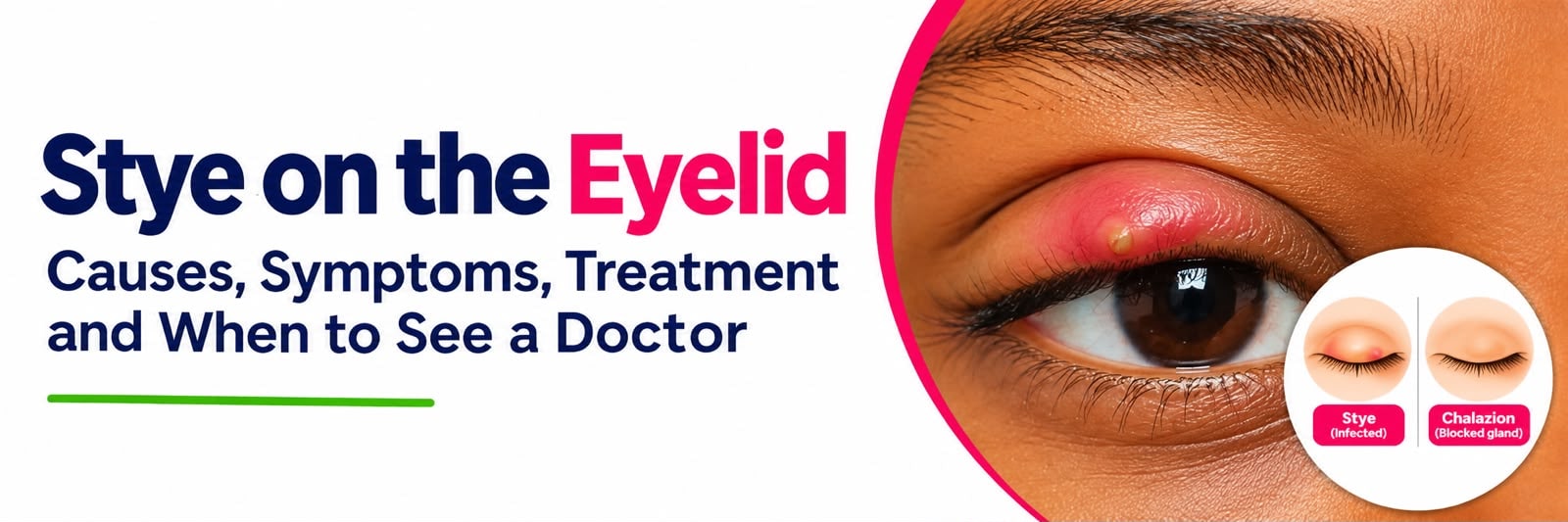
What Is a Stye?
Have you noticed a painful, swollen bump on your upper or lower eyelid that looks like a pimple? It could be a stye, also known medically as a hordeolum.
A stye is a small, painful lump that develops near the edge of the eyelid, often close to the eyelashes. It usually occurs when a tiny oil-producing gland or eyelash follicle becomes blocked and develops a bacterial infection.
Styes are common and can affect anyone, although they are more common in adults. Most cases are not serious and usually resolve within one to two weeks.
What Are the Types of Styes?
There are two main types:
External stye: Develops on the outside edge of the eyelid, usually near an eyelash. This is the most common type.
Internal stye: Develops on the inner surface of the eyelid when an oil-producing gland becomes infected. It can cause more significant swelling and discomfort.
What Are the Symptoms of a Stye?
The most common sign is a painful bump along the eyelid, often resembling a pimple. Other symptoms include:
Redness and swelling of the eyelid.
Pain or tenderness when touching the affected area.
Crusting along the eyelashes.
Discharge from the eye.
Excessive tearing.
Itching or soreness.
Sensitivity to light.
A feeling that something is stuck in the eye.
Sometimes, the swelling can affect the entire eyelid.
What Causes a Stye?
Most styes develop when bacteria infect an oil-producing gland or eyelash follicle. The infection causes inflammation, leading to the familiar red, painful swelling.
Anyone can develop a stye, but the risk may be higher if you have:
Had styes before.
Blepharitis (inflammation of the eyelid edges).
Skin conditions such as acne, rosacea or dandruff.
Diabetes.
Dry skin.
Certain hormonal changes.
How Do You Treat a Stye at Home?
Most uncomplicated styes can be managed at home. The aim is to relieve discomfort and help the blocked gland drain naturally.
1. Apply a warm compress
This is the main home treatment.
Wash your hands.
Soak a clean cloth in comfortably warm water.
Wring out excess water.
Place it gently over your closed eyelid for 10–15 minutes.
Repeat three to four times daily, using a clean cloth each time.
The warmth helps soften the blockage and encourages natural drainage. Make sure the cloth is not too hot because eyelid skin is delicate.
2. Keep your eyelids clean
Gently clean the eyelid with clean water and a mild cleanser. Avoid getting soap into the eye. Do not rub or scrub the swollen area.
3. Relieve the pain
If the stye is painful, an appropriate over-the-counter pain reliever such as paracetamol may help. Ask a pharmacist if you are unsure which medicine is suitable for you.
4. Avoid eye makeup and contact lenses
Avoid mascara, eyeliner and other eye makeup until the stye has healed. If you wear contact lenses, use glasses temporarily.
5. Do not squeeze or pop it
Never try to burst, pierce or squeeze a stye like a normal pimple. This can worsen the infection and cause it to spread.
See a doctor if the pain and swelling don’t start getting better after 48 hours of self-care at home. Other treatments include:
Draining: Your eye doctor might make a small cut (incision) to drain the stye (they’ll give you local anesthesia so you don’t feel pain).
A steroid injection: Your eye doctor might give you a steroid injection to reduce swelling in your eyelid.
Do You Need Antibiotics for a Stye?
Not every stye requires antibiotics.
Many uncomplicated styes improve with warm compresses and good eyelid hygiene alone.
If an infection persists or spreads, a healthcare professional may prescribe antibiotic eye drops or ointment. Oral antibiotics may be necessary if the infection spreads into the surrounding tissues.
In some cases, an eye doctor may need to drain the stye using a small procedure under local anaesthesia.
Important: Do not use leftover antibiotic eye drops or ointments without professional advice. Not every eyelid swelling is caused by a bacterial infection, and the wrong treatment may delay appropriate care.
When Should You See a Doctor?
Seek medical attention if:
Your eyelid swells shut.
Your vision becomes blurred or worse.
Pain or swelling continues to increase after two to three days.
Pus or blood comes from the bump.
The eyelid feels unusually hot.
Blisters develop on the eyelid.
The stye is not improving after about 48 hours of home care.
You keep developing styes.
Significant eye pain, fever or redness and swelling spreading around the eye also need urgent medical assessment.
How Long Does a Stye Take to Heal?
Most styes improve within a few days and disappear completely within one to two weeks. Warm compresses can help with recovery.
If a lump persists, becomes worse or repeatedly returns, it should be examined by an eye doctor.
Is a Stye Contagious?
A stye is generally not considered contagious. However, bacteria can spread through contaminated hands and personal items.
To reduce the risk of spreading bacteria:
Wash your hands before and after touching your eye.
Avoid rubbing your eyes.
Do not share towels, face cloths or eye makeup.
Keep pillowcases and face towels clean.
What Is the Difference Between a Stye and a Chalazion?
Both conditions cause lumps on the eyelid, but they are not the same.
StyeChalazionUsually caused by a bacterial infectionUsually caused by a blocked oil glandOften painful and tenderUsually painless or less painfulOften appears near the eyelashesOften develops farther back on the eyelidMay look like a red pimpleUsually feels like a firm lump
A chalazion is not usually an infection, although it can sometimes develop after an internal stye. Both may benefit from warm compresses.
Final Takeaway
A stye can be painful and irritating, but most cases are mild and clear up on their own. Apply a warm compress, keep your eyelids clean and avoid squeezing the bump.
If the swelling worsens, affects your vision or keeps coming back, seek professional eye care.
Healthfield Pharmacy – Same care. Closer to you.